A snow blower needs very few accessories, but the ones it does need tend to be needed urgently and out of hours. Consumable parts are cheap, compact and specific to the model, which makes them ideal things to buy in autumn and terrible things to shop for during a storm. This guide covers what is genuinely worth stocking and, just as importantly, how to confirm a part actually fits your machine.
Fit is determined by the manual, not by a listing
Every part below is model-specific. The part number in your operator manual is the specification; a listing claiming compatibility with a long list of models is a seller's claim, not evidence. Where a manufacturer publishes a part number, match it exactly.
A shared brand name proves nothing about fit. Neither does a similar appearance. This is the same principle our methodology applies to specifications: documented, exact, or not claimed at all.

Shear pins - the one part to always have
Shear pins break by design when the auger strikes an obstruction, protecting the gearbox. They are the most likely part to fail mid-storm and the cheapest to keep in stock. Buy the manufacturer's specified pin and keep several with the machine.
Do not substitute an ordinary bolt. A fastener that does not shear at the designed load transmits the impact to the gearbox, turning a two-dollar part into a repair bill. The replacement procedure is in the maintenance basics.
Skid shoes and scraper bars
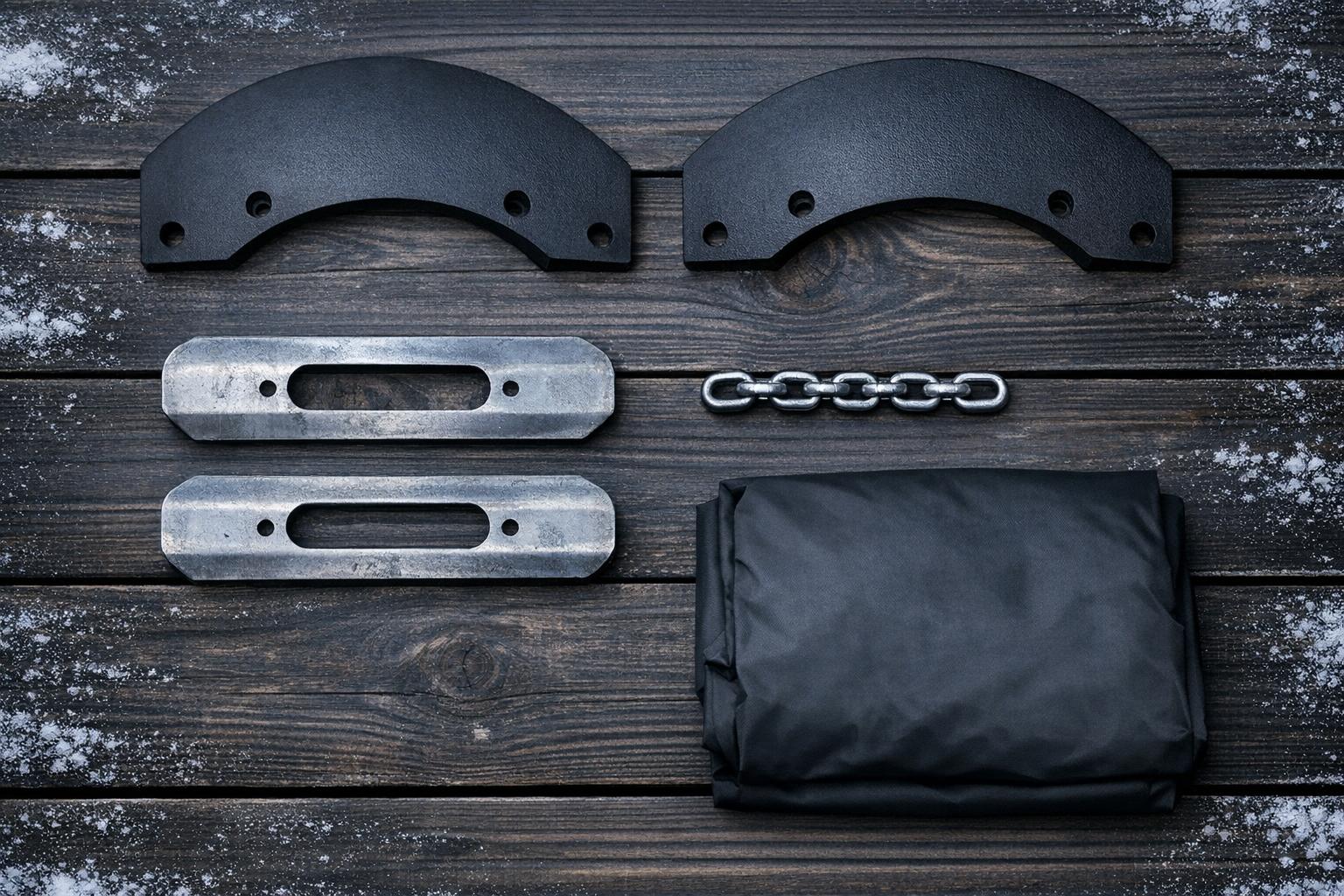
These are the wear parts that set and maintain auger housing clearance. They wear at a rate that depends heavily on your surface - gravel is far harder on them than pavement. Many skid shoes can be reversed once before replacement.
Check them during the winter preparation checklist and set them for your surface, following the gravel and paved surfaces guide.
The clean-out tool
The clean-out tool is a safety device rather than an accessory, and if yours is missing it should be replaced before the machine is used again. Manufacturers mount it on the machine so it is present when a chute clogs.
There is no acceptable improvised substitute. Never use a hand, and never use anything while the machine is running. Never clear a clogged chute or auger housing with your hands. Shut the machine off, remove the key or battery pack, wait for every moving part to stop, and use the clean-out tool supplied with the machine.
Check that it is present and securely mounted every time you take the machine out, not just at the start of the season. Tools mounted with a clip work loose over a winter of vibration, and the moment you discover it is gone should not be the moment the chute clogs.
Covers, chains and traction aids
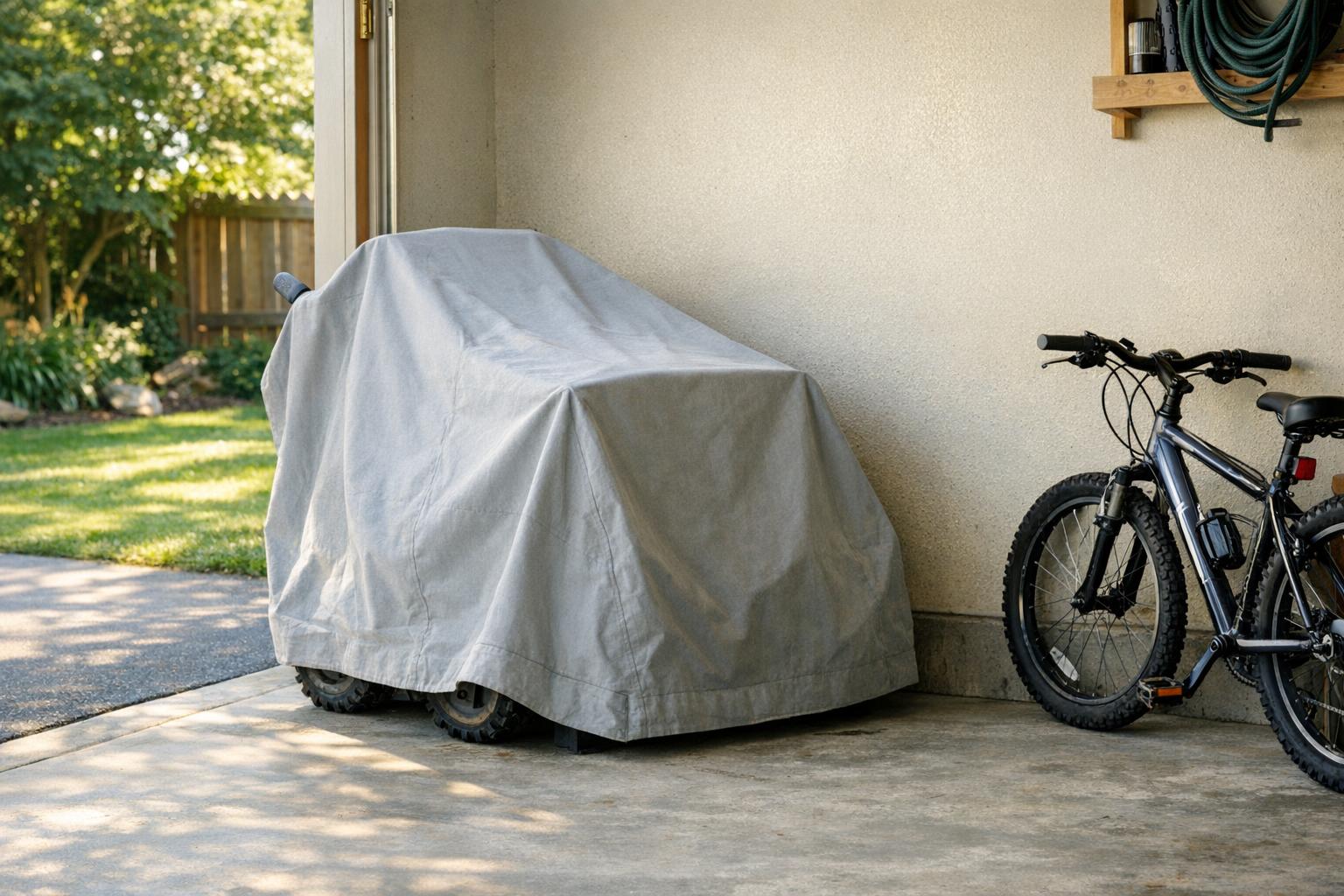
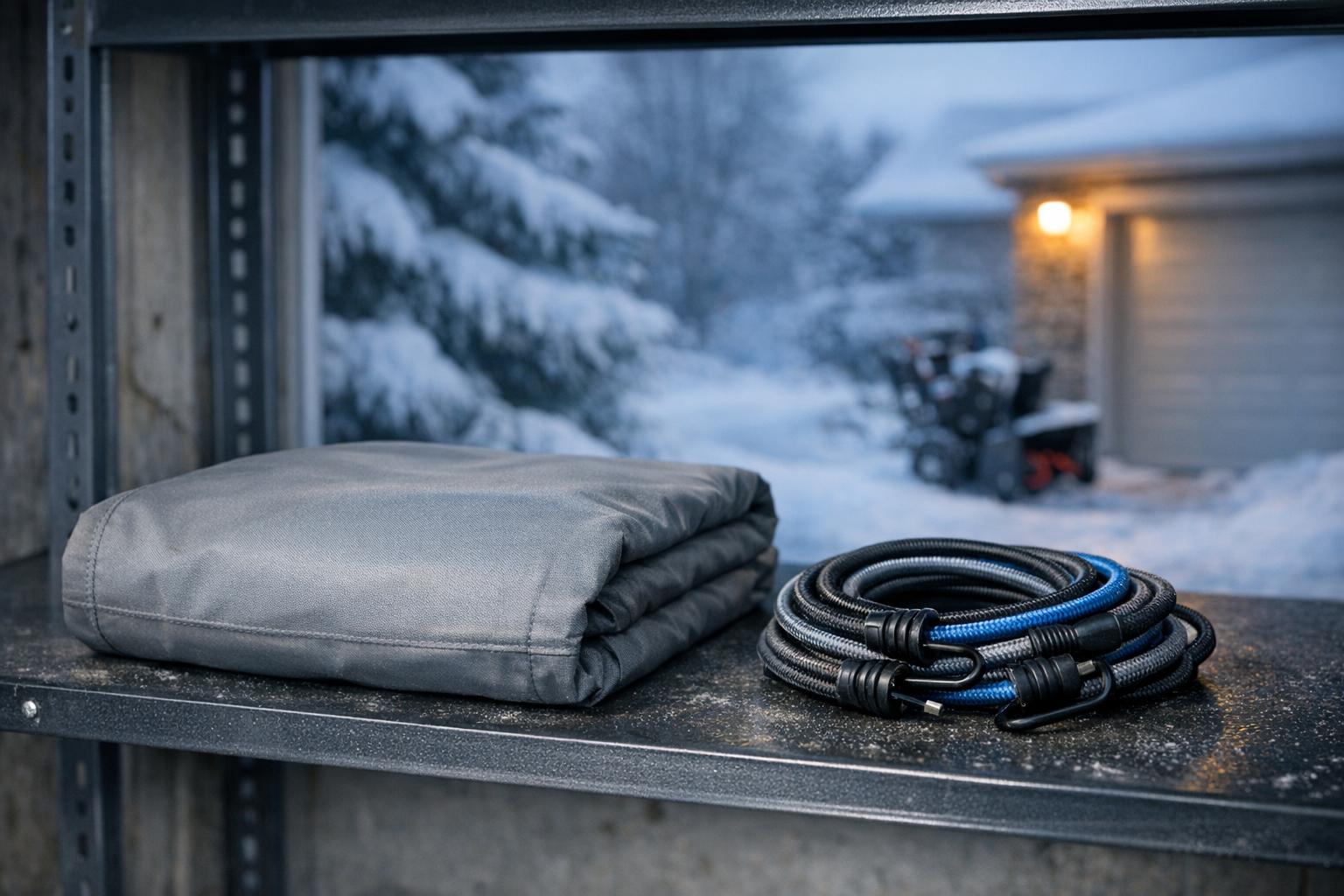
A cover protects against dust and weather during the off-season, but only over a machine that is clean and completely dry - a cover over a damp machine traps moisture and does more harm than good. Size covers to the machine's actual dimensions rather than to a category description.
Tyre chains and traction aids exist for steep or icy driveways, and they are worth considering only if your manufacturer supports them on your model. Confirm that first; adding traction hardware a manufacturer has not approved changes how the machine handles.
Where reputable parts come from
Manufacturer and authorised dealer channels are the reliable source for anything structural or safety-related: shear pins, augers, belts, clean-out tools. Aftermarket parts exist across a wide range of quality, and a marketplace listing that names twenty compatible models is making a claim it has not demonstrated.
For non-critical items - covers, general hardware, storage accessories - the risk of a mismatch is inconvenience rather than damage, and a wider range of sellers is reasonable. Apply the caution where the consequences are mechanical.
Keep the model and serial number written down somewhere you can find it. Ordering the right part is far faster when you are not guessing at the model from memory.
What to buy in autumn
A realistic stock list is short: correct shear pins, a spare set of skid shoes if your surface is abrasive, a clean-out tool if yours has gone missing, fuel stabiliser for a gas machine, and a cover if the machine stores outdoors. That covers most of what fails or runs out.
Browse the accessories section of the full catalog, and confirm every part against your manual before ordering.
Store the small parts together with the machine rather than scattered through the garage. A single labelled box holding shear pins, spare skid shoes and the manual turns a mid-storm repair into a five-minute job instead of a search.