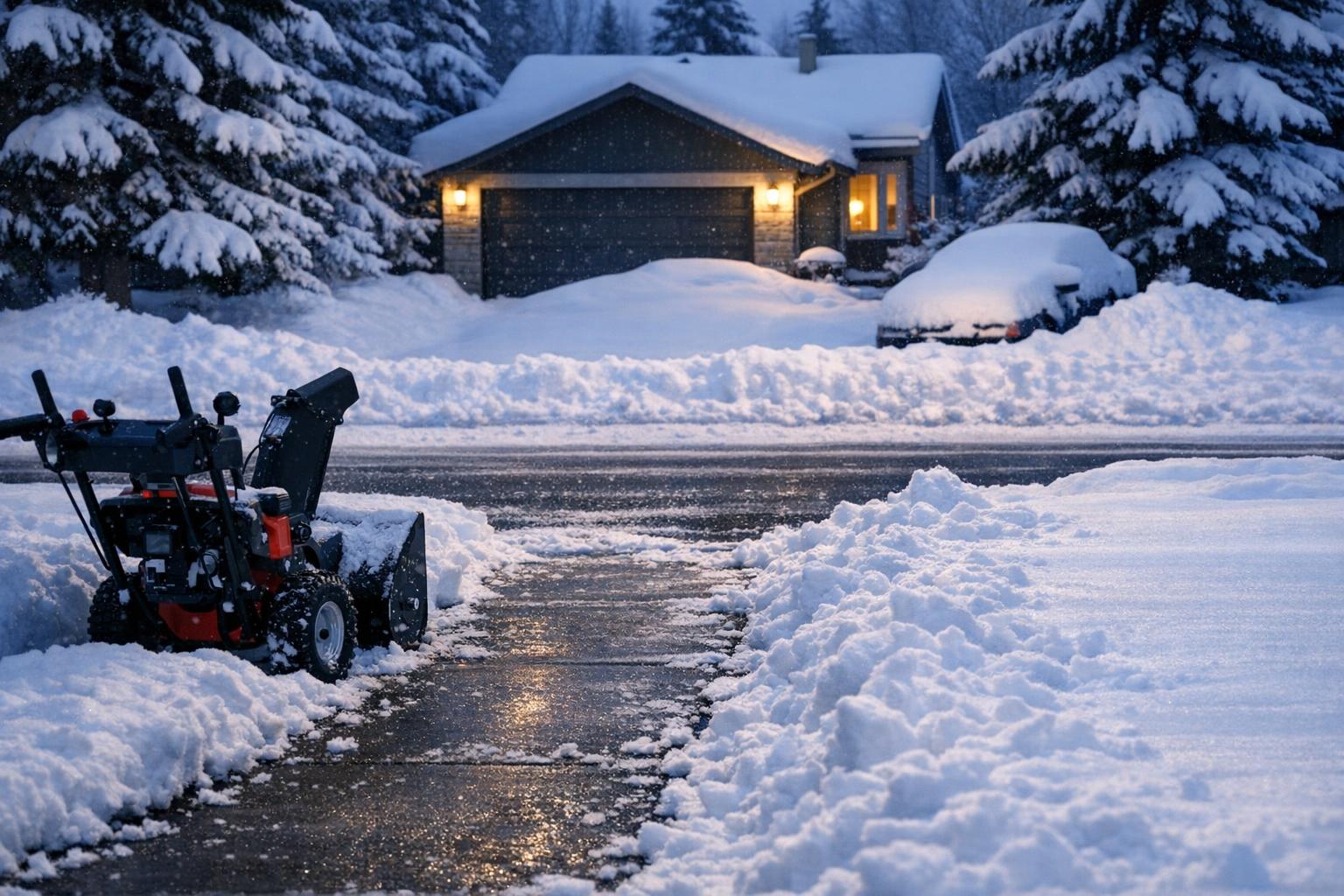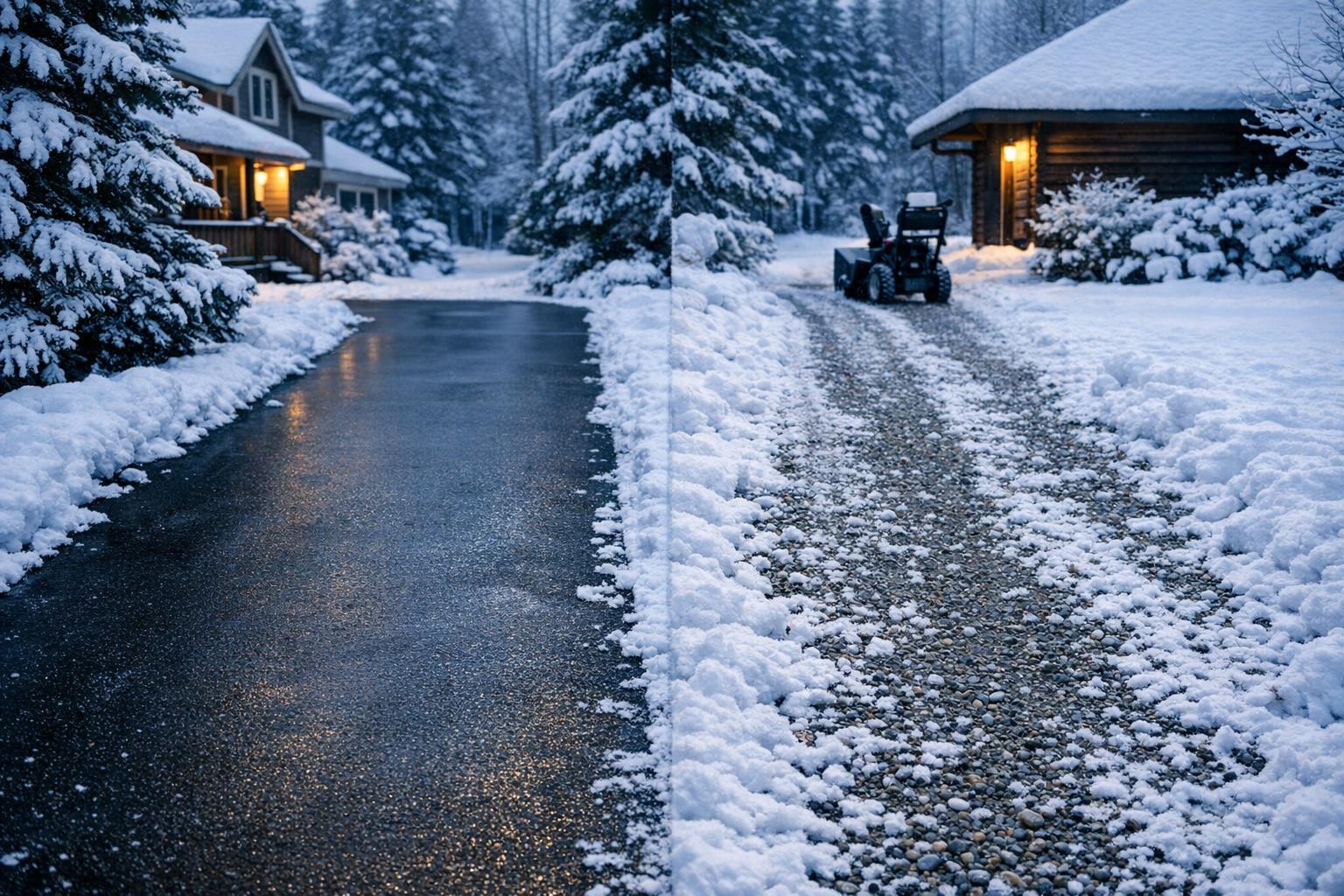
Surface type is the most consequential detail buyers leave out when describing their driveway, and it changes both which machine is suitable and how that machine must be set up. The difference comes down to one adjustment - how far the auger housing rides above the ground - and to a design constraint that rules single-stage machines out of gravel entirely.
Why gravel rules out single-stage machines
A single-stage auger contacts the surface as part of its normal operation. On gravel that means it picks up stones and discharges them through the chute at the same velocity as the snow. Manufacturers restrict these machines to paved surfaces for exactly this reason, and the restriction is in the manual, not a matter of opinion.
The two-stage design holds its steel auger clear of the surface on adjustable skid shoes, which is what makes gravel operation possible. The mechanical difference is explained in the single-stage vs two-stage comparison.
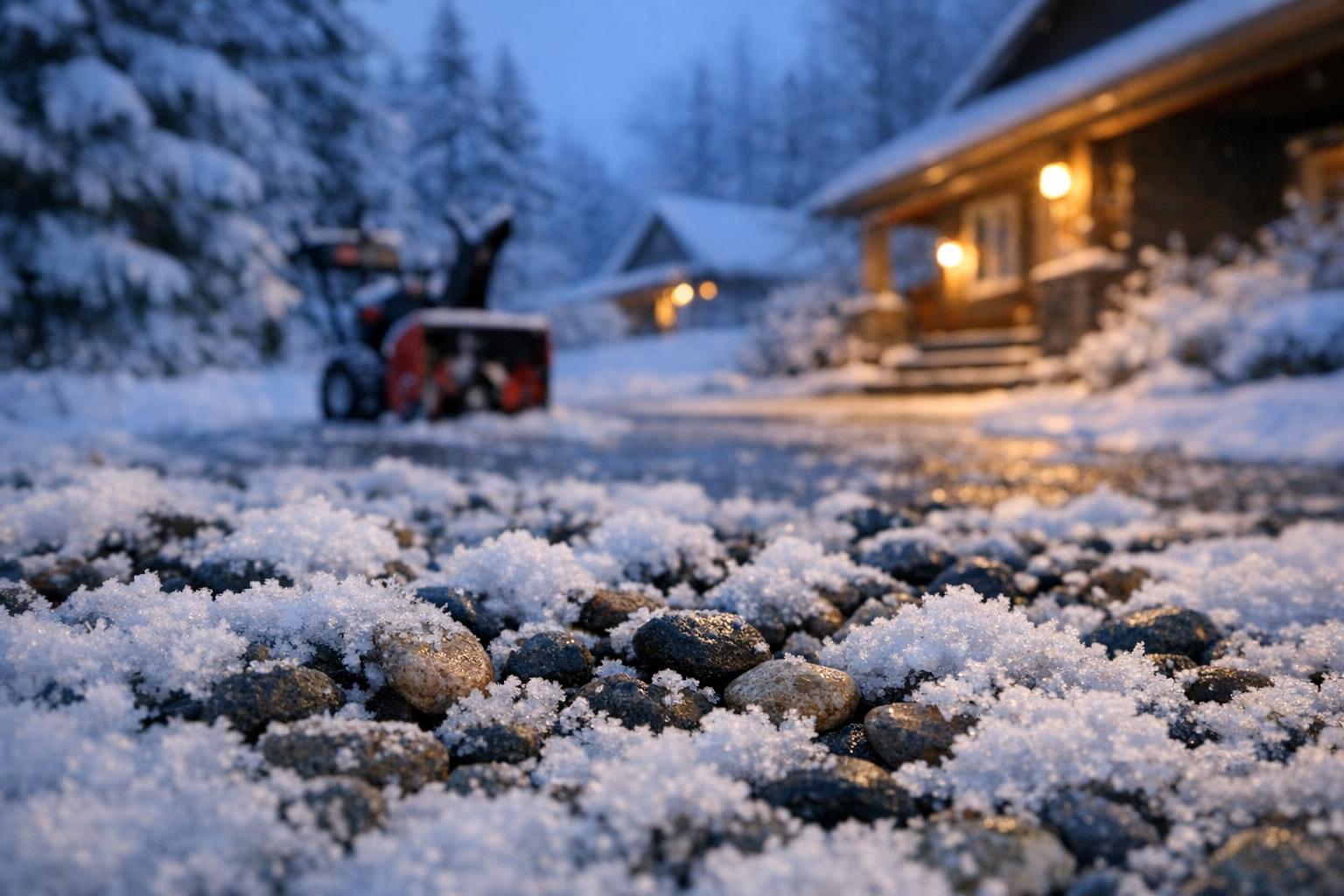
Setting skid shoes for gravel
On gravel, skid shoes are set to hold the auger housing well clear of the surface - your manual will specify the clearance. The machine will leave a layer of snow behind, and that layer is the point: it is what keeps the auger from reaching the stone underneath.
Accept the residual layer rather than fighting it. Lowering the housing to scrape gravel clean is how stones enter the impeller, which damages the machine and creates a projectile hazard covered in the safety essentials.
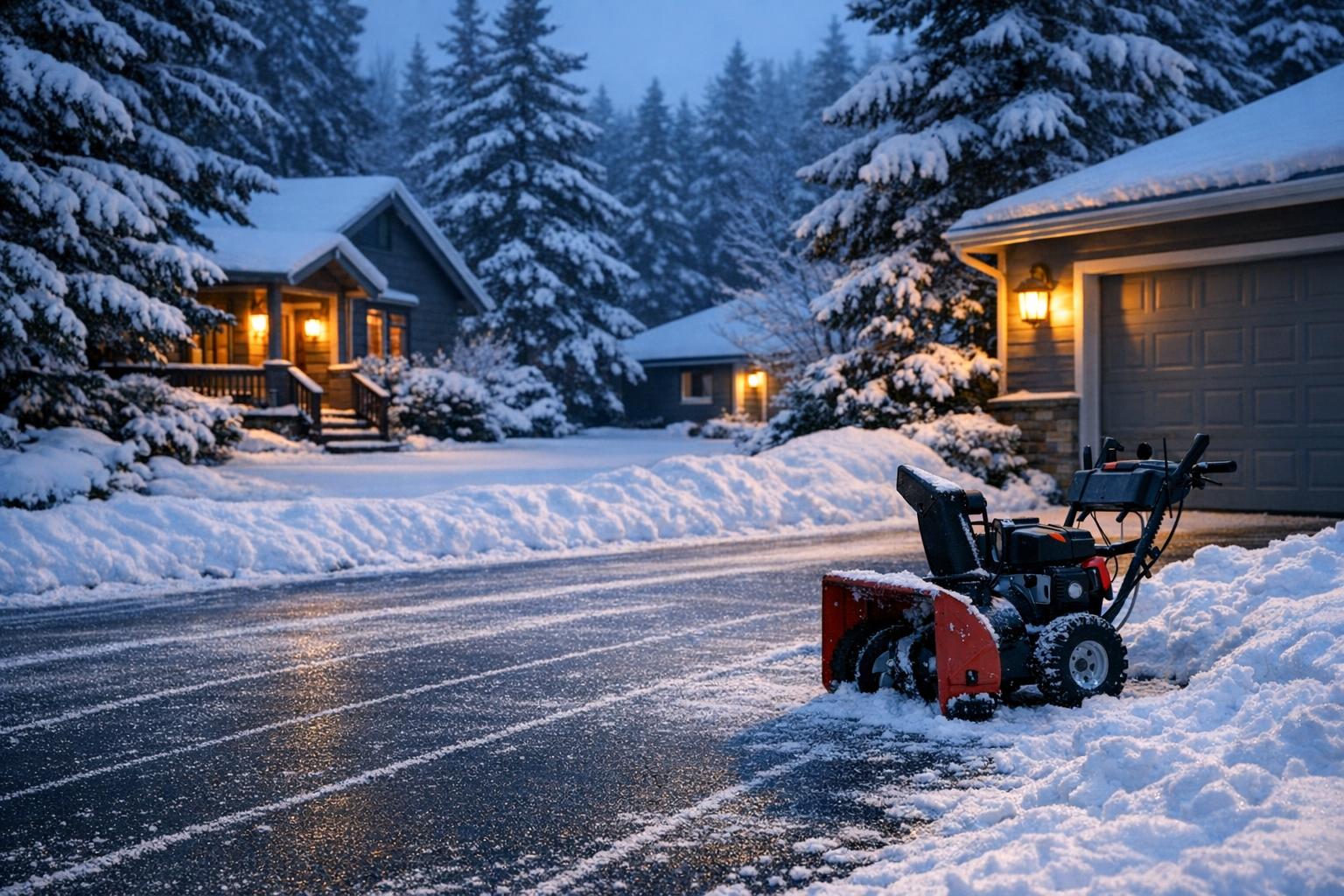
Setting skid shoes for paved surfaces
On asphalt or concrete, the shoes can be set much lower for a closer clearance, leaving noticeably less snow behind. Even here, running the scraper bar directly against the surface will wear both the bar and the surface, and it will catch on expansion joints and raised edges.
Pavers and decorative concrete deserve caution. Uneven joints catch a low scraper bar, and a snagged housing is hard on both machine and surface.
Mixed and transitional surfaces
Many properties are not one surface. A paved driveway may meet a gravel parking area, or a concrete apron may transition to a chip-seal approach. Set the skid shoes for the most demanding surface on the property - that is, the loosest - and accept the residual layer on the paved sections.
Alternatively, set for the paved surface and simply raise the machine for the gravel section, if the adjustment is quick enough on your model to make that practical.
Wear, replacement and seasonal checks
Skid shoes wear, and they wear faster and less evenly on gravel. Many are designed to be reversed once before replacement. Check them at the start of every season and set them deliberately rather than assuming last year's setting survived.
Skid shoes and scraper bars are ordinary consumable parts, discussed alongside other wear items in the parts and accessories guide and in the maintenance basics.
What the surface does to the machine over time
Gravel is abrasive in a way pavement is not. Skid shoes wear faster, the scraper bar wears faster, and stone that reaches the impeller can bend or chip it. None of that is a reason to avoid a two-stage machine on gravel - it is the surface these machines are designed to handle - but it does mean the wear parts are genuinely consumable rather than nominally so.
Frozen gravel behaves differently from loose gravel. Early and late in the season, before the surface freezes solid, stone moves most easily and skid shoe height matters most. Once the surface is frozen hard, stones are locked in place and the machine has an easier time, which is why the worst pickup usually happens on the first and last clearings of the year.
Inspect the auger housing at the end of each season for impact damage, and note anything unusual for the maintenance basics.
Choosing a machine for your surface
If your surface is gravel, chip seal or uneven, a two-stage machine is effectively the only appropriate choice, and the width decision then follows from the clearing-width guide. If it is smooth pavement and snowfall is moderate, single-stage remains a legitimate option with real advantages in weight and storage.
Whatever the surface, walk it before the season and remove anything the auger could pick up. Never clear a clogged chute or auger housing with your hands. Shut the machine off, remove the key or battery pack, wait for every moving part to stop, and use the clean-out tool supplied with the machine.