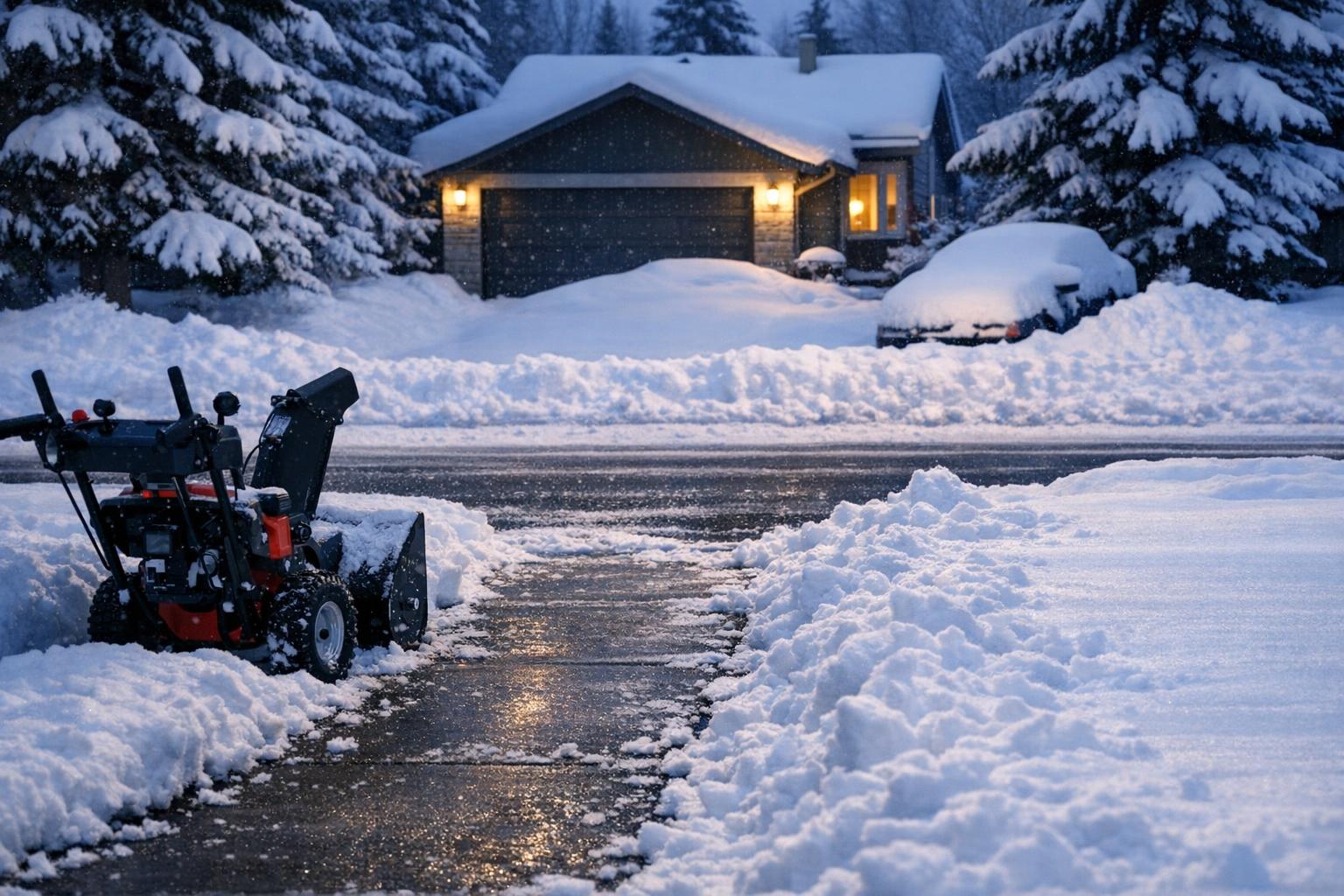
Clearing width is the first number on almost every snow blower listing, and it is the number that decides how many times you walk the driveway. It is also the number most often chosen by instinct rather than arithmetic. Working out how wide a machine your surface actually justifies takes two measurements and one honest assessment of how much time you are willing to spend outside. This guide walks through that calculation and the tradeoffs a wider auger housing brings with it.
Measure the surface before you shop
Take a tape to the driveway and write down its length and its width at the widest point. Add any walkway, apron or parking pad you also intend to clear, because those surfaces consume passes too. A two-car driveway of roughly 20 by 20 feet is a very different buying problem from a 120-foot rural approach, even though both are described as 'a driveway' in casual conversation. Record the numbers rather than estimating them; the difference between 18 and 24 feet of width is two extra passes on every single snowfall for the entire life of the machine.
Once you have the measurements, the clearing-width planner turns them into a suggested width band using plain arithmetic: surface width divided by effective clearing width, allowing for the overlap every pass needs.

Why passes matter more than width alone
No machine clears its full stated width on every pass. Operators overlap by several inches to avoid leaving a ridge, so an advertised 24-inch machine effectively clears closer to 20 to 22 inches of new ground per pass. Divide your surface width by that effective figure, round up, and you have your pass count for a single lane. Multiply by the number of lanes your driveway length requires and you have a realistic picture of the job.
Two extra passes sounds trivial until you count the season. Twenty snowfalls at two additional passes each, on a long driveway, is a meaningful amount of standing in the cold. That is the real argument for a wider machine, and it is a much better argument than the vague sense that wider must be better.

The 24 to 26 inch band
Machines in the 24 to 26 inch range are the volume centre of the two-stage market, and for suburban driveways they are usually the honest answer. They clear a two-car driveway in a manageable number of passes, they fit through a standard garage side door, and they store against a wall without dominating the space. Both battery and gas platforms are well represented in this band, so the width decision does not force a power-source decision.
Our 24-26 inch two-stage comparison covers listings in exactly this band, ranked by the documented specification rules published in our methodology.
When 28 inches and wider is justified
Above 28 inches, the case is about volume rather than convenience. Long driveways, properties that see heavy lake-effect or mountain snowfall, and surfaces where plough ridges pile at the street end all benefit from a wider intake and a taller auger housing. These machines are heavier, they need more storage depth, and on a small suburban driveway they spend more time being manoeuvred than clearing.
If your situation genuinely calls for this class, the 28 inch and wider comparison gathers the wider listings. Check the intake height as well as the width: a wide machine with a short intake still struggles with a deep plough ridge.
Width is not the only constraint
A wider machine has to get to the snow before it can clear it. Measure the narrowest gate, path or door it must pass through, and the depth of the storage space where it will live for eight months of the year. Measure the turning space at the end of the driveway too, because a heavy two-stage machine that cannot be turned easily is a machine you will resent.
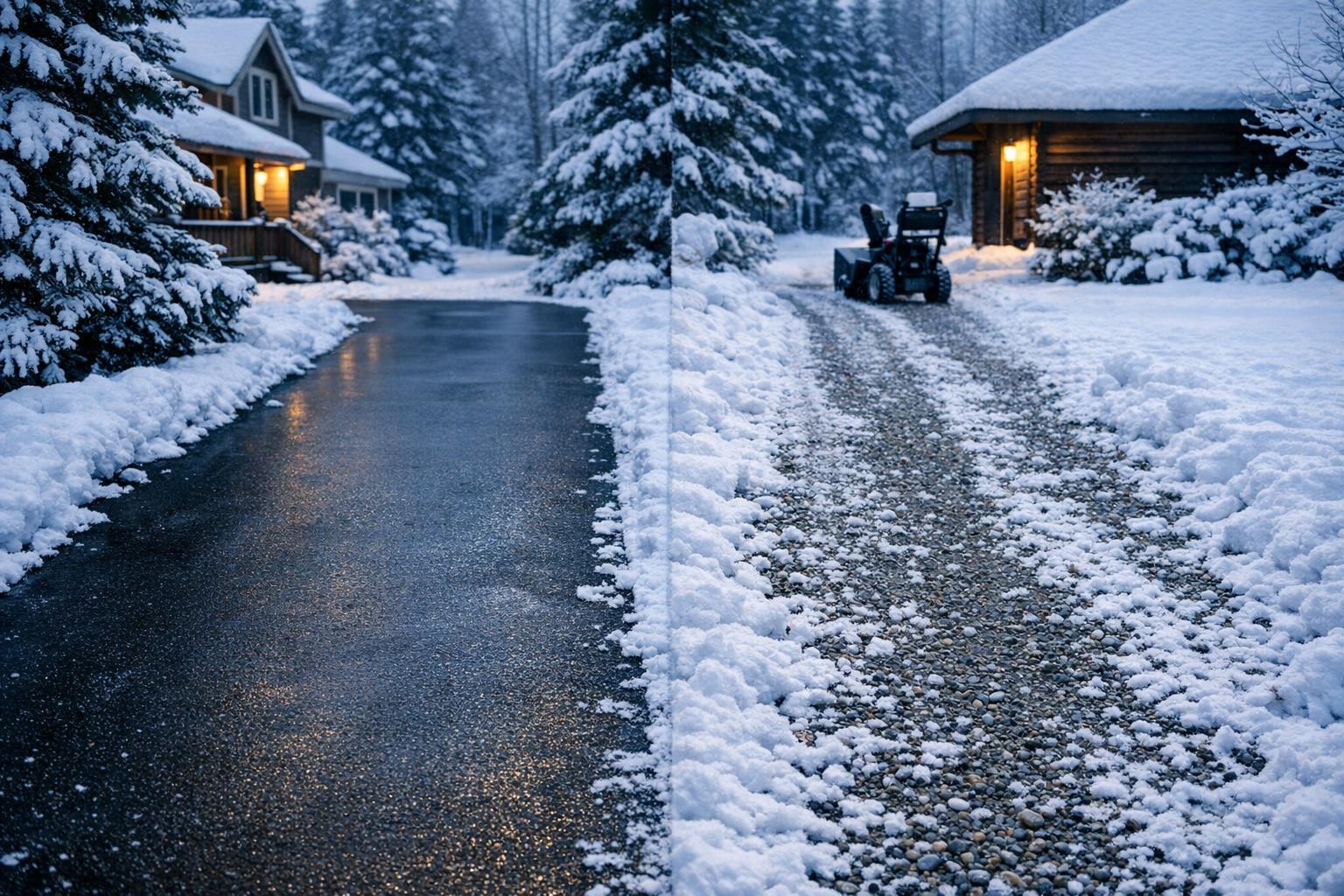
Weight interacts with surface as well. On a gravel surface, skid shoe adjustment matters more than width, a subject covered in the gravel and paved surfaces guide.
Putting the decision together
Write down three numbers: surface width, surface length, and the narrowest access point. Use them in that order. Surface width sets the band, surface length tells you whether extra passes are tolerable, and the access measurement can veto a machine that otherwise looked ideal. Only then start comparing individual listings.
Once you have a width band, the remaining questions are about power source and features. The battery vs gas guide covers the ownership tradeoffs, and the single-stage vs two-stage comparison explains why a two-stage machine is the right starting point for most driveways in the first place. Never clear a clogged chute or auger housing with your hands. Shut the machine off, remove the key or battery pack, wait for every moving part to stop, and use the clean-out tool supplied with the machine.