Snow blower injuries follow a depressingly consistent pattern, and almost all of them involve a hand entering a chute or auger housing on a machine that appeared to have stopped. The mechanism is well understood: a jammed auger stores energy, and clearing the obstruction releases it. Everything in this guide follows from that single fact, and the single practice that prevents it.
Never clear a chute or auger by hand
This is the rule the entire category is built around. If the chute clogs or the auger jams, shut the machine off, remove the ignition key or the battery pack, wait for every moving part to come to a complete stop, and use the clean-out tool supplied with the machine to clear the blockage.
A stopped auger is not necessarily a safe auger. Compressed snow in the housing can hold the auger under tension, and removing the obstruction can allow it to turn. That is why the tool exists and why the instruction appears on a label on every machine sold.
The clean-out tool stays with the machine
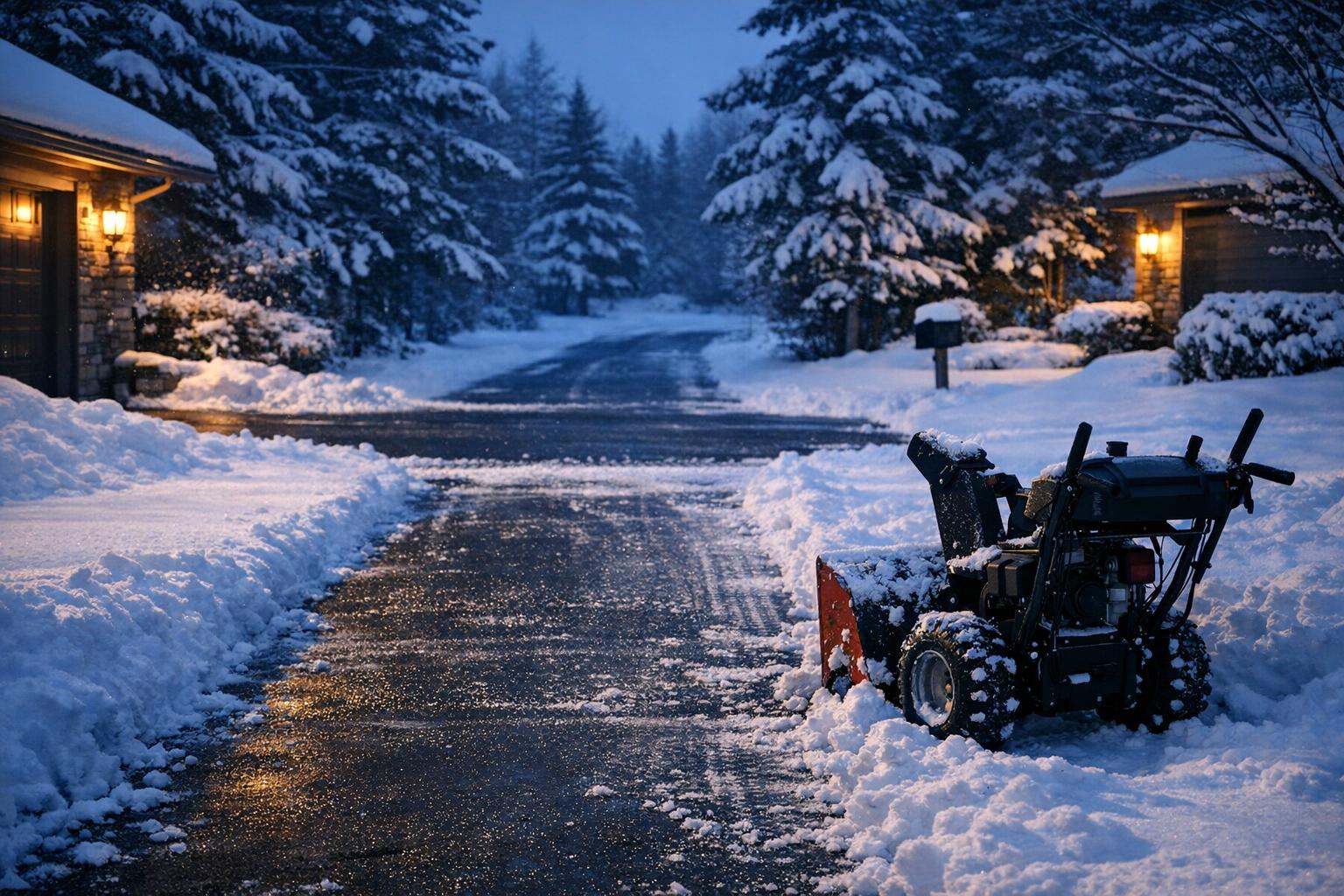
Manufacturers mount a clean-out tool on the machine specifically so it is available at the moment it is needed. A tool in the back of the garage is a tool that will not be fetched when a chute clogs and the snow is still falling.
If the tool is missing, replace it before the season starts. It is an inexpensive part and there is no acceptable substitute for it - a gloved hand least of all. Note it during the winter preparation checklist.
Clear the surface before you start
Walk the area before the first pass of the season and again after anything has been left outside. Extension cords, garden hoses, doormats, newspapers, landscape stone and toys all become projectiles or auger jams. Driveway markers placed in autumn make the surface edges visible once the snow covers them.
On gravel, correct skid shoe height reduces the amount of stone the machine can pick up, which is a safety matter as much as a surface-protection one. See the gravel and paved surfaces guide.
Footwear, clothing and visibility
Snow clearing happens on a surface that is, by definition, slippery. Footwear with genuine traction is basic equipment. Avoid loose scarves and drawstrings that could be caught by moving parts, and wear eye protection against thrown snow and grit. Hearing protection is reasonable with a gas machine.
Work in daylight or with adequate lighting. Many machines have headlights; they are useful rather than decorative.
Bystanders and discharge direction
Keep children and pets indoors while the machine is running, not merely at a distance. The discharge chute throws material with considerable force and the thrown material may include whatever the auger picked up. Always know where the chute is pointing before you engage the auger, and never point it toward people, windows, vehicles or roads.
Chute direction and the distances involved are discussed in the throw distance and chute control guide.
Fatigue, cold and knowing when to stop
Snow clearing is physical work done in cold air, often early in the morning and sometimes after a poor night's sleep. Fatigue is the condition in which people take shortcuts, and the shortcut this equipment punishes is reaching into a chute. If you are tired enough to consider it, that is the signal to stop, not to hurry.
Health authorities have long noted that snow removal exertion in cold weather is a cardiac risk for some people. If that applies to you, discuss it with a physician rather than with a product listing, and consider whether the job should be done by someone else.
Break long sessions up, dress for the cold rather than for the effort, and clear during or shortly after a snowfall rather than letting depth accumulate past what the machine and you can comfortably handle.
Carbon monoxide and starting a gas machine
Gas engines produce carbon monoxide, which is colourless, odourless and lethal. Never start or run a gas snow blower in a garage, shed or breezeway, including with the door open. Move it outside first, every time.
Battery machines eliminate this particular risk, which is one of the ownership considerations in the battery vs gas guide. They do not eliminate any of the auger hazards above.
Install carbon monoxide alarms in the house regardless. They are inexpensive, they are recommended by every fire safety authority, and they protect against far more than a misjudged snow blower start.